
Shares of Billionbrains Garage Ventures, the parent of online broking platform Groww, soared nearly 30 per cent on their market debut on Wednesday, defying the recent trend of muted listings. The stock opened at Rs 112 and hit a high of Rs 134.4 before settling at Rs 128.85 on the NSE - a gain of 28.85 per cent over its issue price of Rs 100.

The average daily turnover (ADTV) in the derivatives market rose to a 12-month high in October, touching 506 trillion - up nearly 46 per cent since June - as volatility picked up and concerns over further regulatory tightening eased. Derivatives activity had slumped earlier this year after the Securities and Exchange Board of India (Sebi) capped weekly expiries to two days and discontinued weekly contracts on non-benchmark indices.

'...aggressive pricing amid volatility, but these are exceptions.'

After a year of modest returns, equity investors may anticipate gains of 10-15 per cent in Samvat 2082, which began on October 21. Although valuations have moderated from their peaks a year earlier, they remain above long-term averages, potentially limiting sharp upsides.

More than a third of 83 mainboard IPOs this year ended their debut sessions in the red, with losses of up to 35 per cent.

With several $500 million-plus deals in the pipeline -- including ICICI Prudential AMC, Lenskart, PhonePe, Groww, PhysicsWallah, Meesho, Pine Labs, and Zepto -- investment bankers look poised for another year of hefty bonuses in 2025.

'Equities may not outperform every year, but if they do so seven times out of 10, it's an asset class worth relying on.'

LG Electronics India made a dazzling market debut on Tuesday, ending 48 per cent higher than its issue price and surpassing its South Korean parent in market value.

This marks the strongest DRHP filing tally since 1996, when 428 firms sought to enter India's equity markets.

For LG Electronics India, the Rs 11,607 crore initial public offering (IPO) is not just a fundraising exercise. The company's senior executives describe it as a step towards becoming "future-ready", showcasing financial strength while preparing for the next phase of growth in a market they see as still underpenetrated.
Tata Capital is set to launch India's largest ever initial public offering (IPO) by a non-banking financial company (NBFC), valuing the Tata group firm at Rs 1.38 trillion. This will make the company India's fifth-most-valued NBFC after Bajaj Finance (Rs 6.12 trillion), Bajaj Finserv (Rs 3.2 trillion), Jio Financial Services (Rs 1.87 trillion), and IRFC (Rs 1.59 trillion).

'If not bullish, volatility should be minimal.'

'It's better to stay away from large IT stocks until there is clarity on tariffs.'

'If we want to pivot meaningfully from a services-driven economy to a technology and manufacturing-led one.'

'The hearing is not adversarial but inquisitorial in nature -- it allows Sebi to examine the context, the strategy, and the intent behind the trades, particularly when algorithmic and expiry-day trading are involved.'

Domestic institutional investors (DIIs) poured in Rs 94,829 crore of fresh money into Indian equities in August, the second-highest monthly inflow after record Rs 1.07 trillion influx in October 2024.

Pre-initial public offering (IPO) allotments have fallen out of favour over the past two years amidst buoyant primary markets and increasing average float sizes. In 2023, 13 firms raised a record Rs 1,074 crore through pre-IPO placements.

Global emerging market investors are sharply cutting back on India, making it the largest underweight market, as funds rotate into China, Hong Kong, and South Korea amid tariff shocks and valuation concerns.

Domestic markets saw the addition of nearly 3 million new dematerialised (demat) accounts in July, marking the highest monthly increase since December 2024. This is also the third consecutive month that witnessed a rise in account openings, following a period of moderation from January to April.
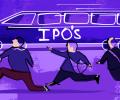
India's initial public offering (IPO) market is rewriting the rules of sectoral dominance, with a diverse slate of companies entering the stock market arena.
